
What Are the Key Benefits of Facilities Management Services UK for Integrated Cleaning and Maintenance?
Summary: Ensuring Audit-Ready Food Hygiene
Securing robust facilities management services UK guarantees strict regulatory compliance for critical manufacturing environments. This systematic approach integrates specialist deep cleaning with preventative maintenance to directly mitigate microbial risk, eliminate operational downtime, and ensure your facility remains permanently audit-ready.
- Integrated strategies reduce the risk of allergen cross-contamination during critical production runs.
- Systematic facility maintenance ensures full compliance with BRCGS, SALSA, and ISO 14001 standards.
- Bespoke FM and cleaning services protect operational uptime through methodical scheduling and expert intervention.
Why is Navigating Complex Regulatory Demands Critical in Manufacturing?
Navigating complex regulatory demands is critical because non-compliance results in severe financial penalties, product recalls, and reputational damage. Systematic hygiene and maintenance protocols prove absolute due diligence, ensuring manufacturing plants consistently meet stringent BRCGS and SALSA audit requirements.
Plant managers face constant pressure from stringent compliance targets and the operational risks associated with contamination. Partnering with a dedicated specialist resolves these critical pain points immediately. This structured approach guarantees systematic control over every operational variable, ensuring the manufacturing environment remains secure.
Regulatory standards in the food and pharmaceutical sectors demand absolute precision. Inspectors look for documented proof of methodical hygiene practices and proactive structural maintenance. Failure to present this evidence during an inspection immediately triggers non-conformance reports, threatening your operational licence and brand integrity.
Overcoming the Burden of Unannounced Audits
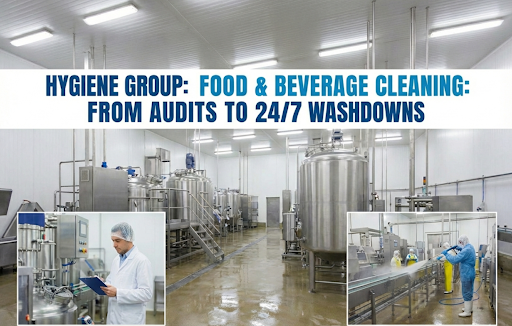
Unannounced audits require perpetual readiness from facility managers. Regulatory inspectors expect immediate access to validated cleaning schedules and structural maintenance records. Failing to produce this documentation instantly results in critical compliance failures. Our systematic strategies eliminate this panic by maintaining a continuous state of audit readiness, regardless of when external inspectors arrive on site.
Furthermore, relying on internal production staff for complex hygiene tasks often disrupts core manufacturing output. It also strains internal training resources, as hygiene protocols require highly specific technical knowledge. Outsourcing these critical responsibilities to an accredited specialist allows your internal teams to focus solely on yield and production efficiency.
How Does Integrated Facilities Management Improve Audit Compliance?
Integrated facilities management improves audit compliance by synchronising preventive maintenance with systematic deep-cleaning schedules. This unified approach eliminates structural contamination risks, ensures continuous operational uptime, and guarantees rigorous adherence to stringent regulatory frameworks.
Audit bodies require meticulous documentation to verify hygienic controls. An integrated strategy provides transparent reporting and continuous verification. Every cleaning task aligns directly with specific compliance mandates. This methodical approach proves absolute due diligence to external auditors, demonstrating that risks are proactively managed rather than reactively addressed.
Poor facility maintenance directly impacts hygiene standards. Leaking overhead pipes, degraded floor seals, or damaged ventilation ducts create ideal environments for microbial proliferation. Integrated services address the structural fault and the resulting contamination simultaneously. This combined methodology prevents minor maintenance issues from escalating into major compliance failures.
The Financial Impact of Pathogen Outbreaks
The consequences of poor hygiene management are severe. The Food Standards Agency reports 2.4 million cases of foodborne illness annually in the UK (Food Standards Agency). Robust facility management acts as the primary defence against these widespread pathogen outbreaks, protecting end consumers and your brand reputation.
Recent global audit data further highlights this challenge, revealing that housekeeping and hygiene consistently rank as the top non-conformity worldwide during food safety inspections (BRCGS). Implementing integrated facilities management directly prevents these recurring, high-risk compliance failures by addressing root structural faults before they manifest as hygienic breaches.
How Can You Align Facility Maintenance with ISO 14001 Environmental Standards?
Aligning facility maintenance with ISO 14001 standards requires careful management of waste and chemical runoff. Integrated services ensure all cleaning effluents are handled responsibly, utilising calibrated equipment and targeted chemical applications to minimise environmental impact while maintaining superior hygiene.
Modern manufacturing must adhere to strict environmental protocols alongside standard hygiene regulations. Integrating these dual requirements demands a highly methodical approach to chemical deployment. Unregulated chemical usage not only damages local ecosystems but also degrades expensive manufacturing equipment through corrosive action.
Specialist teams solve this by using precise chemical titrations based on specific residue types. They employ advanced, low-volume water systems to reduce total water consumption during the rinsing phase. This systematic control protects local environments, satisfies ISO 14001 auditors, and delivers clinical eradication of microbial threats.
Why Choose a Specialist Commercial Cleaning Provider UK Over Generalists?
Selecting a specialist commercial cleaning provider in the UK prevents critical compliance failures. Specialists possess deep technical knowledge of complex contamination vectors and successfully identify hidden harbourage points that generalist cleaners consistently overlook in high-risk processing environments.
Generalist providers operate on basic aesthetic principles. They clean for visual satisfaction rather than microbial eradication. This superficial approach leaves microscopic pathogens thriving within complex machinery and drainage systems. High-risk manufacturing demands a clinical, results-driven methodology where hygiene is scientifically validated, not simply assumed based on appearance.
When generalist cleaners attempt to manage complex facilities, they frequently cross-contaminate zones by using inappropriate equipment. A specialist provider implements strict colour-coding and systematic separation protocols. This rigorous standardisation prevents the transfer of allergens between distinct production areas, actively protecting the integrity of the manufacturing line.
The Importance of Industry Specificity
Unlike generalist providers, we are dedicated solely to the food, beverage, and pharmaceutical sectors. Partnering with Hygiene Group ensures you receive bespoke technical support tailored to your exact regulatory landscape. With over 35 years of specialised operational experience, we possess the precise technical knowledge required to secure your facility.
Generalists simply lack the bespoke training required to navigate complex manufacturing environments safely. They do not understand the implications of a positive ATP swab or the nuances of BRCGS documentation. Choosing a specialist partner guarantees that your facility is managed by experts who speak the language of auditors and understand the science of contamination control.
How Does Workforce Stability Impact Your Compliance Scores?
Workforce stability directly protects compliance scores by ensuring consistency. High staff turnover compromises routine protocols and introduces critical contamination risks. A reliable, highly trained workforce delivers meticulous, repeatable results during every operational shift, safeguarding your sensitive manufacturing zones.
A robust hygiene protocol requires technicians who have a deep understanding of the specific machinery and layout of your facility. When temporary or untrained staff step into critical roles, the risk of chemical mishandling or missed harbourage points increases exponentially. Consistency in personnel translates directly to consistency in compliance.
You can discover more about Hygiene Group and our commitment to personnel development. We proudly hold the "Investors in People" silver status. This accreditation proves our dedication to maintaining a highly trained, stable workforce. We invest heavily in our teams so they can deliver reliable, uncompromising results for your facility.
What Protocols Define Effective Facility Maintenance & Cleaning?
Effective facility maintenance & cleaning protocols rely on strict, verifiable methodologies. Implementing a structured four-step cleaning approach guarantees the complete removal of residues, systematically neutralising microbial threats across all complex manufacturing machinery and drainage channels.
Standardised protocols form the backbone of audit readiness. We apply bespoke chemical formulations based on exact residue profiles; protein buildup requires entirely different chemical interventions than carbohydrate residues. This targeted approach ensures maximum cleaning efficacy while actively preventing equipment degradation over time.
We tailor every intervention to the exact specifications of your manufacturing hardware, integrating these protocols with broader industry services to deliver comprehensive operational support. This guarantees that whether we are cleaning a pharmaceutical cleanroom or an industrial bakery, the methodology remains scientifically sound and rigorously enforced.
Executing the Four-Step Cleaning Programme
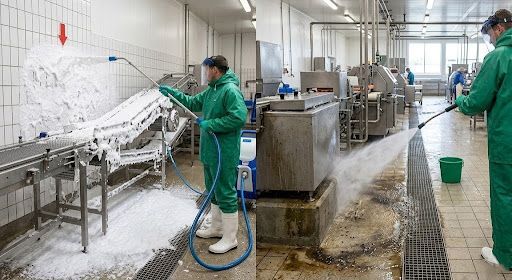
Rigorous compliance demands a methodical sequence of actions. Our accredited technicians strictly follow a validated four-step cleaning protocol to ensure total eradication of contaminants:
- Preparation: We systematically remove gross dry debris to prevent drainage blockages and reduce the overall chemical demand.
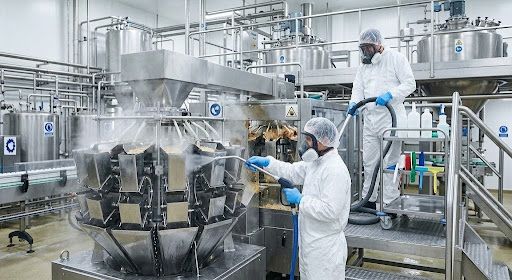
- Application: We apply bespoke detergent foams designed to adhere to surfaces, breaking down stubborn fats and complex proteins effectively.
- Rinsing: We utilise controlled water pressure to thoroughly remove all loosened soil and chemical residues without creating harmful aerosols.
- Sanitisation: We deploy terminal disinfectants to eradicate any remaining pathogens, ensuring total hygienic security before production resumes.
Why is Safe High-Level Cleaning Vital for ATEX Protocol Adherence?
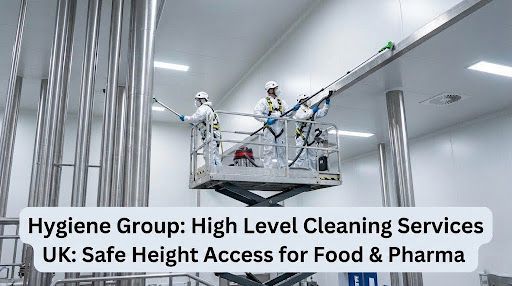
High-level structural components pose significant contamination risks. Dust accumulation on overhead truss work, lighting fixtures, or ventilation systems can easily dislodge and fall into open product streams. We utilise specialist access equipment to eliminate these elevated hazards safely and systematically.
Working at height and navigating wet environments involves significant operational danger. Industry data highlights that slips and trips comprise nearly 25% of food and drink industry injuries reported to the HSE (Health and Safety Executive). Methodical execution of high-level cleaning controls water runoff and mitigates these common workplace hazards, protecting both our staff and your operational continuity.
Sector-specific challenges strictly dictate our approach. Bakeries face extreme risks from airborne flour dust, which acts as both a severe allergen and a highly combustible material. We strictly adhere to ATEX regulations when deploying explosion-proof vacuum equipment to prevent catastrophic dust explosions within sensitive processing zones.
How Do Managed Facility Services UK Mitigate Microbial Risk?
Managed facility services in the UK mitigate microbial risk through continuous environmental verification and targeted chemical sanitisation. This proactive intervention eradicates pathogens, permanently preventing biofilm formation within critical drainage systems and complex processing equipment.
Specific manufacturing environments breed specific microbial threats. Breweries and dairy processing plants struggle constantly with wild yeast proliferation and aggressive mould growth. These organisms thrive in damp environments and rapidly colonise poorly maintained drainage channels. Our methodical interventions utilise targeted titrations to disrupt these growth cycles permanently, neutralising biofilm buildup.
Pharmaceutical cleanrooms require an even higher level of stringency. Residue limits are exceptionally tight, and cross-contamination poses a severe threat to product efficacy. Airflow systems must remain entirely free of particulate matter. We deploy highly specialised HEPA-filtered equipment to validate and maintain these pristine environments, ensuring manufacturing processes proceed without regulatory failure.
Engineering Hygienic Environments
"Our systematic approach ensures that every harbourage point is identified and neutralised. We do not just clean surface areas; we engineer hygienic environments that guarantee continuous audit compliance," states Gurdip Bir, Managing Director at Hygiene Group.
Why is Verifying Results Essential for Complete Due Diligence?
Verifying results is essential because cleaning without documented validation is a severe compliance failure. Technical managers must prove hygienic interventions are successful. Rapid ATP swabbing provides immediate, quantified feedback on microbial loads, guaranteeing complete due diligence for auditors.
Consistent verification builds a robust history of proactive risk management. By systematically proving the efficacy of your hygiene protocols, you protect your brand from catastrophic compliance failures. External auditors require this data to confirm that your facility maintains control over its critical control points between formal inspections.
We utilise rapid ATP swabbing alongside detailed microbiological sampling to instantly quantify surface cleanliness. This methodical testing allows our technicians to reclean specific zones immediately if elevated microbial loads are detected. Production resumes only when absolute hygienic security is scientifically validated and documented.
Achieving Complete Audit Readiness
Ensure your facility is audit-ready. Call our specialist team on 0121 451 3211, email
enquiries@hygiene.co.uk, or
request a site survey here.