
Equipment Cleaning Services UK: Plant, Process & Machinery Deep-Clean
Audit-Ready Deep Cleaning for Food and Pharmaceutical Manufacturing
- Targeted Contaminant Removal: Systematic application of foam cleaning technology penetrates complex machinery infrastructure to eradicate stubborn biofilms and protein matrices.
- Regulatory Compliance Assurance: Methodical sanitation protocols directly support BRCGS, SALSA, and ISO 14001 audit criteria, securing operational due diligence.
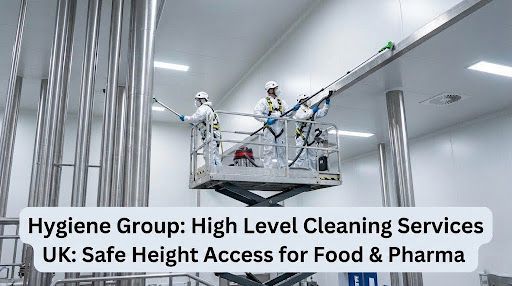
- Advanced Access Solutions: Deployment of specialist rope access teams resolves high-level cleaning challenges without the restrictive costs or downtime associated with fixed scaffolding.
Mitigating Microbial Risk Through Systematic Plant Hygiene
For Technical, Quality, and Plant Managers operating in highly regulated environments, the pressure of unannounced audits and stringent compliance standards dictates every operational decision. Contamination events, production downtime, and the continuous burden of staff training present constant challenges to facility efficiency.
Equipment Cleaning Services UK: Procuring specialist equipment cleaning services is not merely a maintenance task; it is a critical component of risk mitigation. When process equipment is compromised by residual soils, the entire production line is vulnerable to microbial proliferation and costly product recalls.
Generalist cleaning providers frequently lack the sector-specific knowledge required to identify and sanitise complex harbourage points within industrial machinery. In contrast, a bespoke, systematic approach guarantees that every conveyor, silo, and processing unit meets exact hygienic specifications. By implementing structured sanitation protocols, facility managers can achieve optimal audit compliance, safeguard product integrity, and maintain maximum operational uptime.
The Regulatory Baseline: BRCGS, SALSA, and ISO 14001 Compliance
Strict adherence to regulatory standards is non-negotiable in the food, beverage, and pharmaceutical sectors. Specialist hygiene interventions are explicitly designed to align with the core requirements of leading certification bodies.
BRCGS Global Standard for Food Safety mandates rigorous environmental and equipment hygiene protocols. Clause 4.11 specifically dictates that cleaning procedures must be documented, validated, and effectively implemented to prevent cross-contamination. A systematic deep-clean of the machinery provides the documented due diligence required to satisfy these rigorous audit criteria.
For growing enterprises, SALSA (Safe and Local Supplier Approval) imposes similar expectations regarding the methodical maintenance of hygienic production environments. Furthermore, aligning cleaning processes with ISO 14001 Environmental Management Systems ensures that chemical application, effluent discharge, and waste management are conducted responsibly. Accredited hygiene providers utilise targeted chemical dosing and controlled water usage to meet these environmental benchmarks while delivering uncompromising microbiological control.
The 4-Step Structured Approach to Machinery Sanitation
Achieving clinical cleanliness on complex processing lines requires a highly structured, scientifically validated methodology. The deployment of a precise 4-step cleaning approach ensures consistent, results-driven outcomes across all industrial applications.
- Step 1: Preparation and Dry Cleaning: The protocol begins with the isolation of equipment and the removal of gross debris. This dry cleaning phase prevents the creation of dense, wet soils that can clog drainage systems and obscure underlying surfaces.
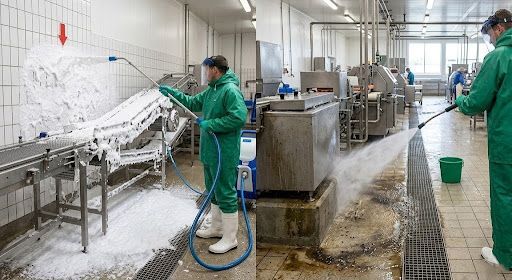
- Step 2: Pre-Rinse and Detergent Application (Foam Cleaning): Foam cleaning is a highly robust method for processing environments. Unlike standard liquid applications, engineered foam possesses superior adhesiveness. This allows the detergent to cling to vertical surfaces, conveyors, and intricate machine components for extended contact times. The creeping capacity of the foam ensures that difficult-to-reach corners and microscopic harbourage points are thoroughly penetrated. Furthermore, foam application produces fewer aerosols than high-pressure spraying, thereby reducing the risk of airborne cross-contamination.
- Step 3: Post-Rinse and Disinfection: Once the detergent has emulsified the organic soils, a controlled rinse removes the chemical and debris suspension. Following this, a targeted disinfectant is applied to neutralise any remaining microbial risk, ensuring the surface is fundamentally hygienic.
- Step 4: Verification and Documentation: Visual inspection is insufficient for technical compliance. The final stage involves systematic verification, often utilising ATP (Adenosine Triphosphate) swabbing to scientifically validate the absence of organic matter. This provides the empirical data required for audit documentation.
Overcoming Sector-Specific Contamination Challenges
Industrial manufacturing encompasses vastly different environments, each presenting bespoke contamination risks. A systematic cleaning strategy must be calibrated to address the precise chemical and physical properties of the prevailing soil types.
Bakery Environments: Flour Dust and ATEX Compliance
Bakeries face unique challenges driven by airborne particulate matter. Flour dust accumulation is not only a primary attractant for stored product insects and pests but also a severe fire and explosion hazard. Facilities must comply with ATEX (Atmospherically Explosible) regulations to control combustible dust. This necessitates highly controlled High-Level Cleaning interventions. Specialist teams systematically remove dust from overhead trusses, cable trays, and ventilation systems, eliminating physical product contamination risks and safeguarding HVAC performance.
Meat Processing: Biofilms and Protein Matrices
The meat processing sector requires aggressive daily sanitation to mitigate the high risks posed by Listeria monocytogenes and Salmonella. Due to the high fat and heavy protein content of raw meat, processing machinery quickly develops resilient biofilms. Standard washdowns are ineffective against these matrices.
Specialist cleaning in this sector requires advanced chemistry, including chlorinated alkaline foams, to break down crystallised deposits and heavy fats. In specific applications, cryogenic cleaning is used to freeze and physically remove carbonised debris without water, protecting sensitive mechanical components while delivering a completely sanitised surface.
Brewing and Beverage: Yeast Accumulation and Drainage Control
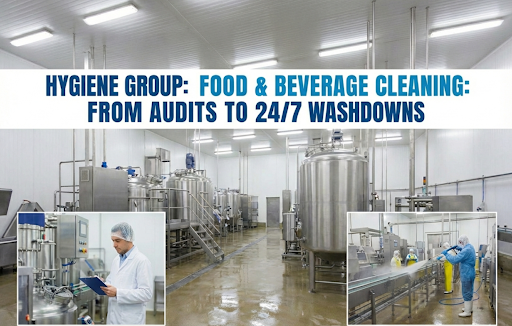
In breweries and liquid processing plants, yeast build-up and sugar residues create immediate microbial risks and attract pests. These by-products rapidly accumulate in complex piping and floor drainage systems. While Clean-in-Place (CIP) systems manage internal pipework, the external machinery, filling lines, and drainage infrastructure require methodical manual intervention. Specialist food-sector cleaning protocols ensure that organic load is systematically removed from these areas, preventing drain blockages and eliminating environmental cross-contamination points.
Pharmaceutical Production: Active Pharmaceutical Ingredient (API) Removal
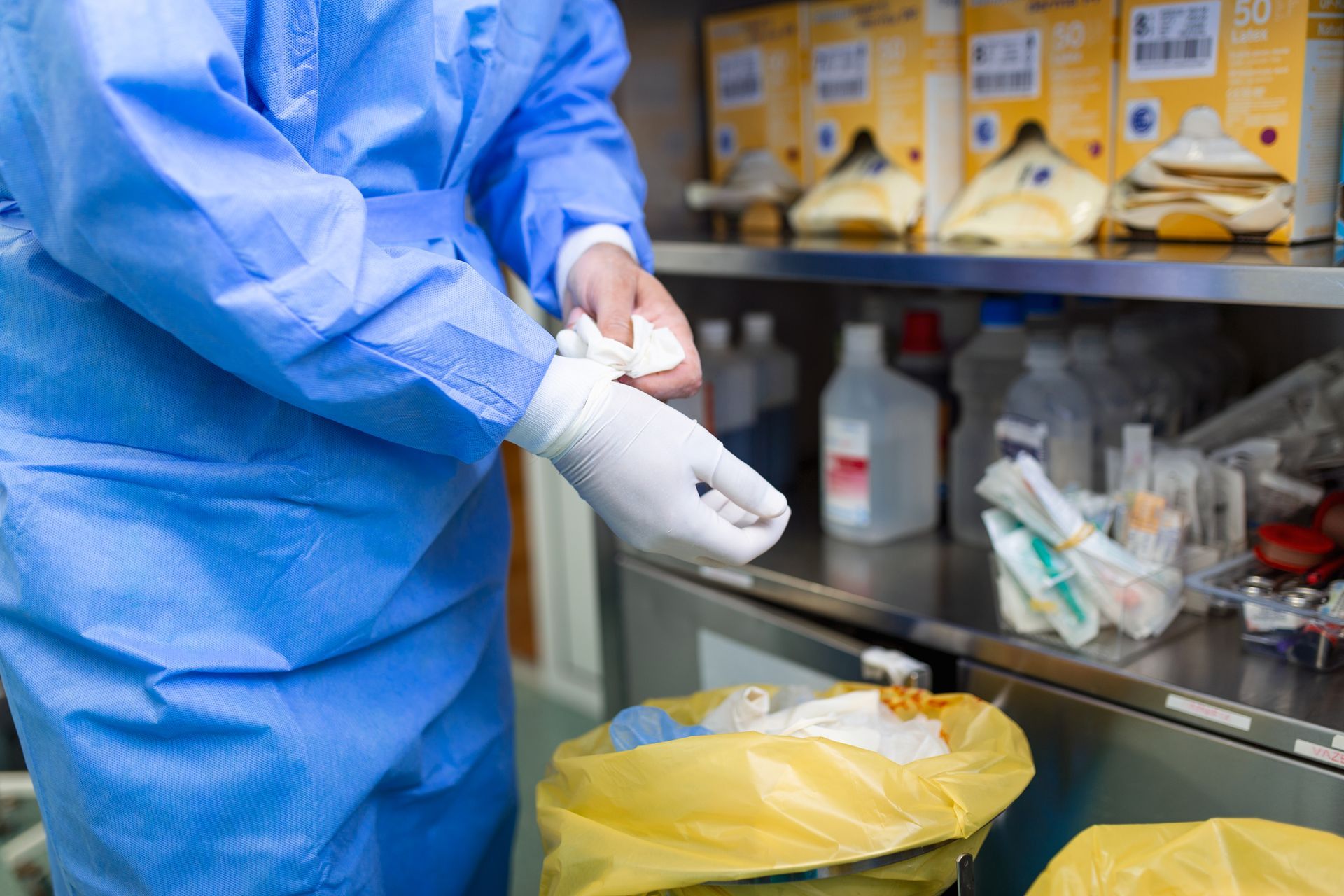
The pharmaceutical industry operates under the most stringent validation criteria globally. Equipment must be entirely free of residue to prevent API cross-contamination between production batches. Specialist pharma sector cleaning involves cleanroom-standard protocols. Operatives utilise locally approved grades of cleaning equipment and professionally laundered protective clothing to maintain sterile environments. Every procedure is highly controlled, ensuring the complete removal of damp or dry residues and maintaining the absolute safety of the working practice.
Why Generalist Facilities Management Fails at Process Equipment Cleaning
Many manufacturing facilities attempt to consolidate their hygiene requirements by utilising generalist Facilities Management (FM) providers. This strategy frequently results in audit failures. Generalist cleaners are proficient at maintaining floors and staff welfare areas; however, they lack the technical competency to dismantle, sanitise, and reassemble complex process machinery.
Generalist providers frequently miss critical harbourage points hidden behind machine guards, beneath conveyor belts, and within drive motors. Furthermore, they often lack the specialist access equipment necessary for industrial environments. Where generalists might rely on expensive and disruptive fixed scaffold systems to reach high-level structures, a specialist provider deploys certified rope access teams. This expertise offers a highly cost-effective, agile solution for cleaning silos, bulk storage units, and structural frameworks without halting ground-level production.
A provider dedicated solely to food and pharma understands the exact hygienic design flaws of processing equipment. They apply targeted chemistry and mechanical action to specific materials, ensuring that stainless steel is protected from corrosive damage while achieving total microbiological control.
Reliability Through an Accredited, Trained Workforce
Achieving consistent audit success requires more than advanced cleaning technology; it requires a highly stable, deeply trained workforce. Unreliable cleaning teams lead to inconsistent hygiene standards, directly threatening production schedules and regulatory standing.
Partnering with an accredited specialist guarantees that the operatives executing the sanitation protocols possess the necessary technical acumen. An authority with over 35 years of dedicated experience provides a proven track record of raising hygiene standards and mitigating operational costs. The deployment of teams accredited by SafeContractor ensures that all health and safety protocols, including confined space entry and COSHH compliance, are strictly managed.
Crucially, workforce stability is a primary indicator of reliable service delivery. Providers holding an Investors in People silver status demonstrate a commitment to staff development and retention. For the Plant Manager, this translates into low staff turnover on site. Familiar, retained operatives understand the specific nuances of the facility's machinery, execute the cleaning schedule with greater efficiency, and consistently deliver the precision required to satisfy external auditors.
When you engage with a dedicated specialist like Hygiene Group, you are securing a systematic, results-driven partnership designed to protect your brand, ensure compliance, and maintain the absolute safety of your manufacturing environment.
Ensure your facility is audit-ready. Call our specialist team on
0121 451 3211, email
enquiries@hygiene.co.uk, or
request a site survey here.