
Pharmaceutical Cleaning Services: Cleanroom Standards, SOPs & Validation
Summary: How Specialist Hygiene Mitigates Cross-Contamination & Audit Risk
- Regulatory Alignment: Detailed adherence to GMP, ISO 14644, and BRCGS standards ensures your facility remains audit-ready and legally compliant.
- Technical Validation: Utilising ATP testing and detailed matrix charts creates a verified audit trail, proving due diligence to external inspectors.
- Specialist Methodologies: Advanced techniques, from cryogenic cleaning to high-level rope access, target hard-to-reach harbourage points that generalist cleaners miss.
The Critical Importance of Validated Hygiene in Pharmaceutical Manufacturing
In the pharmaceutical sector, hygiene is not merely a housekeeping task; it is a critical control point in the manufacturing process. For Technical and Quality Managers, the pressure to maintain sterility, prevent cross-contamination, and adhere to Good Manufacturing Practice (GMP) is constant. A single lapse in hygiene protocols can result in batch rejection, costly downtime, and severe reputational damage.
At Hygiene Group, we understand that pharmaceutical environments require more than a visual clean. They demand a scientific, systematic approach that eliminates microbial risk and chemical residues. Unlike generalist facilities management providers, we operate exclusively as The Specialist Partner to the food, beverage, and pharmaceutical industries. Our 35+ years of experience allow us to implement robust cleaning validation strategies that withstand the scrutiny of the most rigorous audits.
Navigating the Regulatory Landscape: GMP, ISO, and BRCGS
The regulatory framework governing pharmaceutical cleaning services is complex and unforgiving. Compliance is not optional; it is the license to operate.
Good Manufacturing Practice (GMP)
GMP dictates that equipment and facilities must be designed and cleaned to prevent contamination. This requires Standard Operating Procedures (SOPs) that are detailed, reproducible, and documented. Our teams are trained to work within these strict parameters, ensuring that every clean is executed exactly as defined in your site’s Quality Management System (QMS).
ISO 14644 Cleanroom Standards
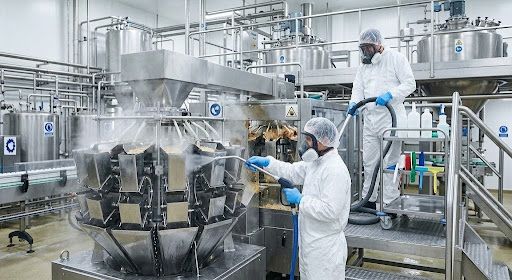
For facilities operating cleanrooms, maintaining the correct ISO classification (e.g., ISO 5, 7, or 8) is paramount. This involves controlling airborne particulate concentration. Our operatives are trained in specific gowning procedures and transfer protocols to ensure that the cleaning process itself does not introduce contaminants. We utilise specialised equipment, such as HEPA-filtered vacuums and non-shedding microfibre materials, to maintain the integrity of the controlled environment.
BRCGS and Cross-Sector Standards
While BRCGS is traditionally associated with food safety, its Hazard Analysis and Critical Control Points (HACCP) principles strongly influence pharmaceutical hygiene, particularly in nutraceuticals. We apply these rigorous risk assessment models to identify harbourage points—areas where bacteria or allergens can accumulate unnoticed.
The Technical Approach: Beyond the Bucket and Mop
Effective cleaning in a pharmaceutical plant requires advanced technical capabilities. We employ a range of specialised methods tailored to the specific residues and surface types found in your facility.
Cryogenic Cleaning (Dry Ice Blasting)
One of the most effective methods for removing stubborn, carbonised, or crystallised deposits is cryogenic cleaning. This non-abrasive technique uses solid carbon dioxide pellets accelerated by an air jet. Upon impact, the pellets sublimate (turn from solid to gas), lifting the contaminant from the surface without leaving any secondary waste or moisture.
- Benefit: Ideal for water-sensitive machinery and electronics.
- Outcome: Reduces downtime as equipment does not always need to be dismantled or dried before restarting production.
High-Level Cleaning and Specialist Access
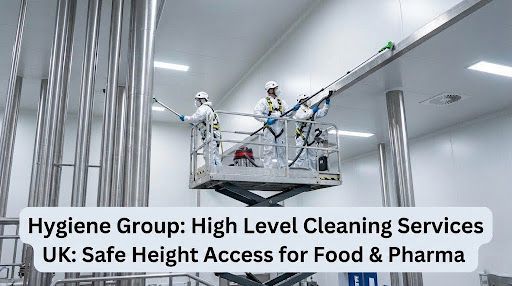
Contaminants do not just settle on workbenches; they accumulate on overhead pipework, trusses, and ventilation ducts. These areas are frequent audit failures due to "harbourage"—the accumulation of dust and potential pathogens in hard-to-reach places.
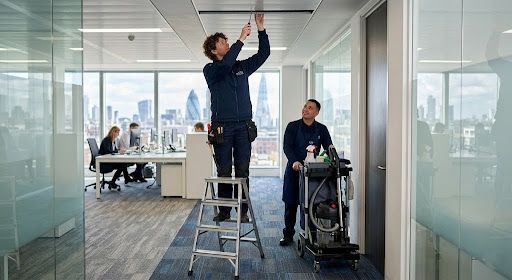
Regular cleaning services often leave these areas untouched due to a lack of certification or appropriate equipment. However, our commercial cleaning service teams include IPAF-certified operatives and specialist rope access technicians. We can safely access and clean high-level structures without disruptive fixed scaffolding, preventing overhead debris from contaminating the production line below.
Confined Space Entry: Silos and Tanks
Pharmaceutical production often involves large-scale storage vessels that require periodic decontamination. Entry into these confined spaces poses significant safety risks. Our teams are fully trained in confined space entry, including search and rescue protocols and the use of breathing apparatus. We ensure that internal surfaces of silos and tanks are chemically clean and free from previous batch residues, eliminating the risk of cross-contamination between product runs.
Developing a Robust Cleaning Validation Strategy
Validation is the evidence that your cleaning process works. Without validation, you have no proof of compliance. We support your validation protocols through a structured, evidence-based methodology.
1. The Matrix Chart System
We abandon ad-hoc cleaning in favour of detailed Matrix Charts. These documents map out every asset and area within your facility, assigning a specific cleaning frequency and method.
- Daily/Shift Tasks: Immediate hygiene maintenance.
- Periodic Deep Cleans: Scheduled intervention for high-level or strip-down cleaning.
- Verification: Sign-off signatures from both the operative and the supervisor. This creates a transparent audit trail. When an auditor asks, "When was this ventilation grille last sanitised?" you can provide the exact date, time, and the operative responsible.
2. ATP Testing and Swabbing
Visual inspection is subjective and insufficient for microbial control. We advocate using Adenosine Triphosphate (ATP) testing to verify cleanliness at the microscopic level. By swabbing surfaces before and after cleaning, we can quantify the reduction in biological matter. This data is crucial for validating the efficacy of the cleaning agents and contact times used in your SOPs.
3. Allergen Management
In facilities that handle multiple active ingredients or allergens, cross-contamination is a significant risk. Our protocols require the complete dismantling of processing equipment to ensure "blind spots" are addressed. We utilise colour-coded equipment and segregated waste streams to prevent allergen transfer, ensuring that your "free-from" claims remain substantiated.
The Problem with Generalist Cleaners
Many pharmaceutical plants attempt to rely on generalist facilities management (FM) companies for their hygiene needs. While these providers may be adept at cleaning offices or reception areas, they often lack the technical acumen required for a GMP environment.
Common failures we observe with generalist providers include:
- Inappropriate Chemical Use: Using general-purpose detergents that may react with pharmaceutical residues or fail to achieve the required log reduction in bacteria.
- Lack of Harbourage Awareness: Cleaning only what is visible at eye level, ignoring the tops of cabinets, cable trays, or the underside of conveyors.
- Poor Training: Operatives who do not understand the implications of breaking a cleanroom seal or improper gowning.
At Hygiene Group, our staff are not just cleaners; they are technical hygiene operatives. As an Investors in People (Silver Status) organisation, we invest heavily in training. Our teams understand why they are cleaning, not just how. They are trained in chemical safety, specific machinery isolation, and the critical nature of contamination control.
Sector Specificity: Tailoring the Solution
Different manufacturing environments present unique hygiene challenges. A "one size fits all" approach is destined to fail.
Dry vs. Wet Environments
- Dry Product Facilities (Tabletting/Powders): The introduction of water can be disastrous, as it encourages bacterial growth in a dry environment. Here, we utilise vacuuming with HEPA filtration and dry-wipe techniques using volatile solvents that evaporate rapidly.
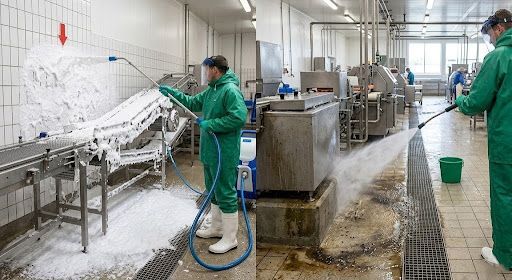
- Wet Product Facilities (Liquids/Creams): These environments require effective drainage management and biofilm removal. We employ foam-cleaning technologies that increase detergent contact time on vertical surfaces, effectively breaking down protein and fatty residues.
High-Care vs. High-Risk
The distinction between High-Care and High-Risk zones is vital. Our transfer procedures ensure that equipment and personnel moving between these zones do not breach the hygiene barrier. We can implement specific changeover routines and tool-sterilisation steps to maintain the integrity of your most sensitive production areas.
Why Choose Hygiene Group?
We are dedicated solely to the food and pharmaceutical sectors. This focus allows us to offer pharmaceutical cleaning services that are technically superior and operationally aligned with your business goals.
- Risk Mitigation: We identify and neutralise risks before they become audit non-conformances.
- Operational Uptime: Our flexible scheduling, including overnight and weekend shifts, ensures that deep cleaning does not interrupt your production targets.
- Accredited Partners: With ISO 9001 (Quality), ISO 14001 (Environmental), and SafeContractor accreditation, we align with your own corporate responsibility and quality standards.
Your product quality depends on the cleanliness of your environment. Do not leave it to chance. Partner with a team that treats hygiene with the same scientific rigour as you treat your production.
Ensure your facility is audit-ready. Call our specialist team on
0121 451 3211, email
enquiries@hygiene.co.uk, or
request a site survey here.