Commercial Disinfection Services UK: Sanitisation for Outbreak Response
Executing rigorous contamination control requires vastly more than basic cleaning procedures. Deploying expert commercial disinfection services in the UK guarantees that your industrial site remains compliant, secure, and fully operational against invisible biological threats.
- Mitigate operational downtime with off-hour specialist deployments.
- Eradicate persistent pathogens using electrostatic and fogging technologies.
- Ensure total regulatory compliance with centralised audit documentation.
Why are commercial disinfection services in the UK critical for outbreak response?
Industrial disinfection specialists rapidly eliminate infectious pathogens and halt active workplace transmission chains. Highly trained mobile crews apply specialised biochemical agents to eradicate invisible viruses that survive daily wiping, yet completely sanitising an infected site often fails when teams overlook one critical structural junction.
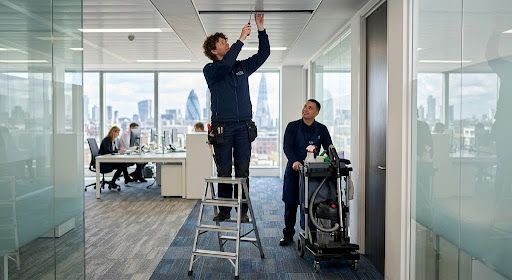
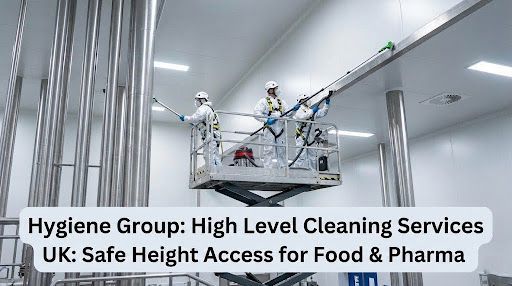
This vulnerable junction is the high-level airflow ventilation system, which actively disperses trapped airborne contaminants across the production floor. By thoroughly decontaminating these elevated ductwork networks, operational leaders prevent re-infection and protect the integrity of the facility. Incorporating comprehensive industrial hygiene services ensures these concealed contamination vectors are permanently neutralised before they compromise production.
Recent benchmarking by the Food Standards Agency reports that pathogenic microorganisms account for 29 percent of all UK food incidents. Partnering with a proven specialist partner guarantees that your site maintains rigorous outbreak readiness at all times.
What specific pathogens do industrial disinfection services target?
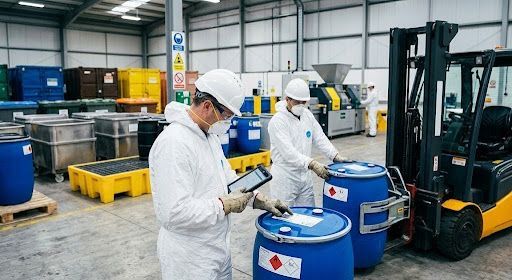
Specialist sanitisation crews specifically target persistent enveloped viruses, resilient bacterial spores, and fast-spreading fungal pathogens. These rigorous eradication methods effectively destroy hazardous biological threats, including Listeria, Salmonella, and novel respiratory viruses, protecting both employee health and stringent product safety standards.
Eradicating these microscopic threats requires deep sector-specific knowledge and exact chemical application protocols tailored to the environment. Generalist cleaners simply lack the technical proficiency and specialised equipment required to manage these severe biohazards safely and comprehensively.
How do specialist hygiene services prevent cross-contamination?
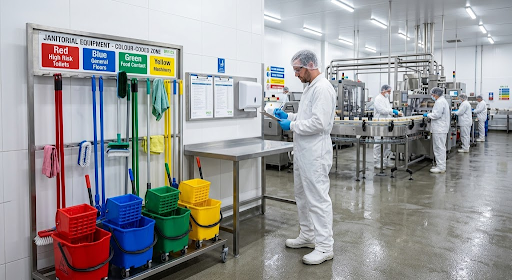
Hygiene experts prevent cross-contamination by implementing strict colour-coded zoning protocols and deploying isolated sanitation equipment for specific production areas. This rigorous physical segregation ensures that dangerous micro-organisms are never transported from raw material processing zones into vulnerable high-risk packaging environments.
Maintaining this strict separation relies heavily on meticulous operative training and continuous monitoring throughout the entire shift. Every movement within the facility is strictly controlled to maintain an impenetrable barrier against bacterial migration and preserve absolute sterility.
How does a site disinfection service differ from standard commercial cleaning?
Professional site disinfection service providers execute deep microbial eradication processes rather than merely removing visible surface dirt. Dedicated sanitisation teams utilise concentrated virucidal chemicals to destroy cellular structures at a molecular level, although achieving absolute sterility remains impossible if operatives fail to manage one crucial element.
That element is the precise chemical contact time required for the active ingredients to penetrate the pathogenic lipid envelopes. Standard janitorial staff frequently wipe surfaces too prematurely, whereas our technicians meticulously calculate and enforce exact dwell times for maximum efficacy. Operating across various industrial cleaning sectors, we ensure our methodologies adapt to specific environmental challenges.
Stringent UK Government guidelines mandate that commercial disinfectants must meet BS EN 1276 or BS EN 13697 standards to effectively destroy harmful bacteria. Utilising these approved formulas within a highly controlled methodology guarantees a robust defence against aggressive industrial outbreaks.
What advanced equipment is used by a virus disinfection contractor?
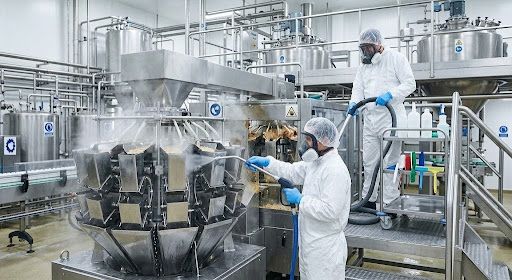
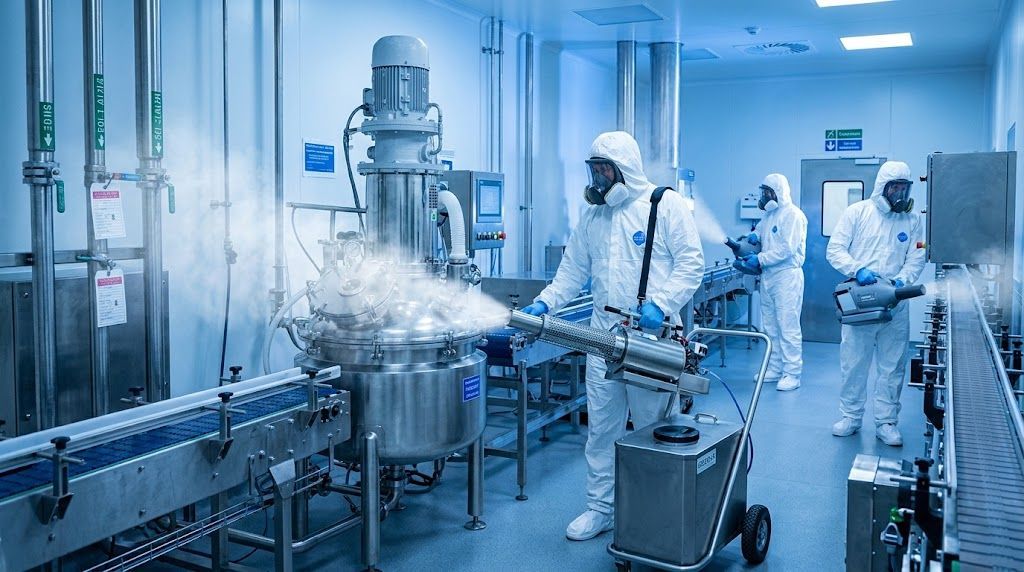
An expert virus disinfection contractor utilises industrial-grade ultra-low volume fogging machines and electrostatic spraying systems. These advanced dispersal technologies electrically charge the disinfectant droplets, forcing the chemical solution to wrap around complex machinery and aggressively bind to hidden structural surfaces.
This electrostatic wrapping effect ensures comprehensive coverage across irregular manufacturing equipment and overhead conveyors that traditional methods miss. Standard spray-and-wipe techniques simply cannot match this level of uniform microbial eradication in large-scale industrial settings.
Why is chemical contact time crucial for disinfection and sanitisation services?
Chemical contact time dictates the mandatory duration a wet sanitiser must remain undisturbed on a surface to completely neutralise pathogens. Interrupting this critical dwell phase prevents the biocidal agents from fully penetrating the bacterial cell walls, leaving hazardous biological material actively infectious.
Validating this precise duration requires rigorous adherence to the manufacturer specifications and strict environmental temperature controls. This exact methodology forms the very foundation of all documented hygiene compliance and audit readiness.
When should a facility deploy emergency disinfection and sanitisation services?
Industrial facility managers must deploy rapid disinfection contractors immediately following a confirmed pathogenic outbreak or critical audit failure. Swift intervention limits operational downtime and protects the workforce from severe illness, yet an emergency response often triggers massive financial losses if management ignores one specific logistical strategy.
That specific logistical strategy involves executing the deep cleaning operations exclusively during scheduled production shutdowns, night shifts, and weekends. We routinely deploy a nationwide workforce of over 500 specialised staff during these off-hours, dramatically reducing overall operational costs and achieving a zero-disruption outcome for the client. This methodology protects both the facility's hygiene status and its commercial profitability.
Expert Insight: "Deploying high-level cleaning crews strictly during non-production windows is the only proven method to guarantee rigorous pathogenic eradication without sacrificing vital manufacturing uptime." - Gurdip Bir, Managing Director at Hygiene Group
How quickly can a virus disinfection contractor respond to an outbreak?
A dedicated virus disinfection contractor can mobilise rapid response units to a contaminated facility within hours of an emergency notification. This accelerated deployment relies on a strategically distributed national workforce and pre-staged biochemical stockpiles ready for immediate and aggressive industrial application.
Acting swiftly minimises the spread of the biological threat and drastically reduces the overall environmental remediation scope. Fast action guarantees that critical supply chains remain functional and secure during an active health crisis.
What are the immediate steps before industrial disinfection services arrive?
Facility operators must immediately isolate the contaminated zones and completely halt all air circulation systems within the affected sector. Evacuating non-essential personnel and sealing the perimeter prevents the accidental tracking of microscopic pathogens into highly sterile manufacturing and processing areas.
Securing the site ensures that the arriving decontamination crews can establish immediate control over the affected environment. Clear communication with the specialist hygiene team during this containment phase is essential for a safe and effective handover.
How do commercial disinfection services in the UK ensure regulatory compliance?
Accredited commercial cleaning partners guarantee regulatory compliance by executing systematic decontamination processes aligned with rigorous ISO standards. Technical management teams generate meticulous post-clean reports to satisfy strict external auditors, but presenting these extensive records often results in immediate audit failure if administrators violate one simple reporting rule.
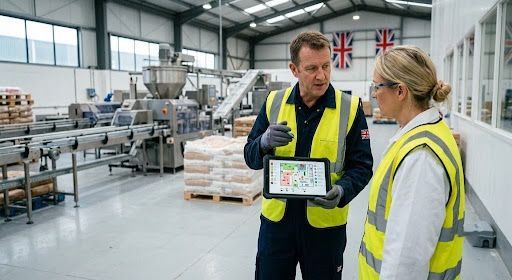
That simple reporting rule is the mandatory standardisation of accountability across all multi-site estates through a unified safety system. Hygiene Group provides clients with one set of key performance indicators and a singular reporting method, eliminating the dangerous inconsistencies found when managing multiple regional contractors. This centralised oversight provides strict auditors with absolute confidence in the facility's hygiene governance.
Official Food Standards Agency data reveals that 94 percent of respondents believe it should be mandatory for businesses to publicly display hygiene ratings. Demonstrating an uncompromising commitment to these visible compliance metrics protects your brand reputation and vital operational license.
Which standards must specialist hygiene services meet for audits?
Specialist sanitation providers must strictly adhere to ISO 9001 quality management protocols and ISO 14001 environmental requirements. Maintaining SafeContractor approval and meeting stringent BRCGS criteria demonstrates a proven capability to operate safely within highly regulated food production and pharmaceutical environments.
These external accreditations require continuous rigorous assessment and regular operative upskilling to maintain valid status. Trusting an unverified contractor severely compromises the safety, legality, and operational standing of the entire industrial facility.
How is site disinfection service documentation managed for traceability?
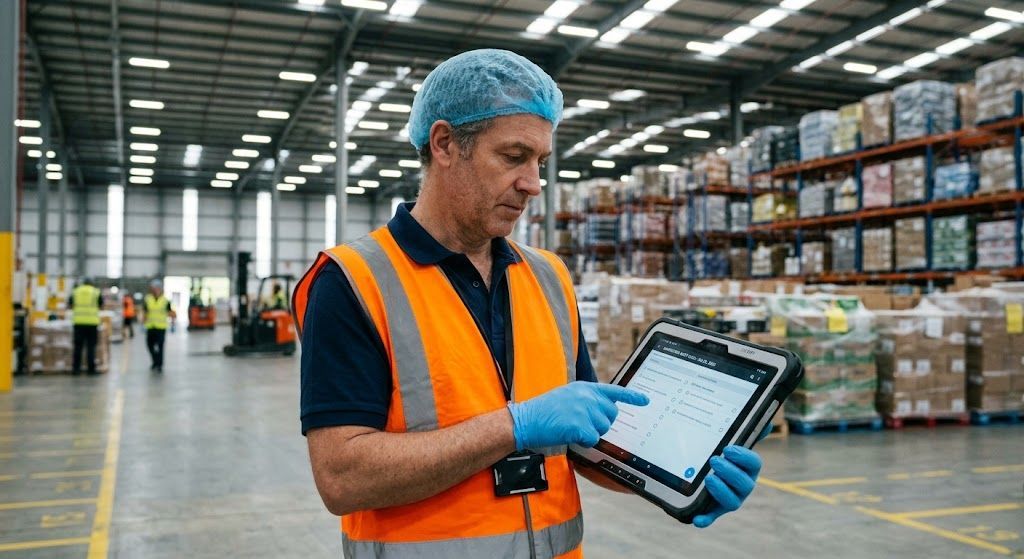
Compliance managers maintain comprehensive digital logs detailing exact chemical batch numbers, precise application times, and specific operative credentials for every sanitation shift. This meticulous digital traceability provides external inspectors with instantaneous proof of absolute due diligence and flawless operational accountability.
Securely archiving these hygiene records guarantees immediate retrieval during unannounced regulatory inspections and external audits. Robust documentation effectively transforms an invisible cleaning process into a concrete, verifiable business asset.
Ensure your facility is audit-ready. Call our specialist team on 0121 451 3211, email
enquiries@hygiene.co.uk, or request a quote here.